
DESCRIPTION
Privacy glass is an innovative glazing product designed to control visibility without sacrificing natural light. It is available in various forms, from technologically advanced “smart” glass that changes its opacity, to permanently treated glass with a textured or frosted surface. The core function of privacy glass is to obscure the view into a space while maintaining an open, airy feel. This makes it a perfect solution for modern offices, healthcare facilities, homes, and public spaces where a balance between openness and privacy is essential.
Key Features and Benefits
1. Smart Glass (Switchable Privacy)
This is the most dynamic type of privacy glass, allowing for instant control. It uses an electrical charge to change its state.
On-Demand Privacy: Switches from transparent to opaque or translucent in milliseconds with a remote, wall switch, or smart automation system. This offers unparalleled flexibility for conference rooms, bathrooms, and residential spaces.
Energy Efficiency: By controlling the amount of sunlight and heat passing through, smart glass can reduce the need for air conditioning and artificial lighting, leading to significant energy savings.
UV and IR Protection: It blocks a high percentage of harmful ultraviolet (UV) and infrared (IR) rays, protecting people and furniture from sun damage and heat gain.
Hygiene and Maintenance: Unlike curtains or blinds, smart glass is easy to clean and is a more hygienic solution for clinical environments.
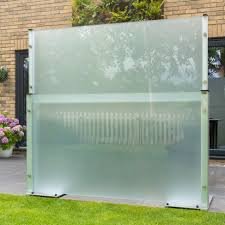
2. Frosted & Acid-Etched Glass
This is a classic and permanent form of privacy glass that provides a consistent, blurred effect.
Permanent Privacy: The glass is treated to have a permanent translucent finish that obscures the view without the need for power.
Soft Light Diffusion: It diffuses incoming sunlight, reducing glare and creating a soft, warm ambiance in the room. This makes it ideal for areas like bathrooms and interior partitions where you want to maintain a bright space while blocking direct sightlines.
Aesthetic Appeal: The smooth, satin finish of acid-etched glass offers a clean, sophisticated look that is easy to maintain and does not show fingerprints as readily as sandblasted glass.
Durability: The permanent etching or frosting is highly durable and will not peel, chip, or fade over time.
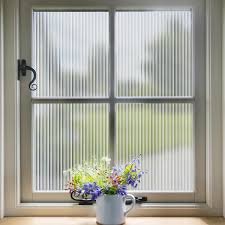
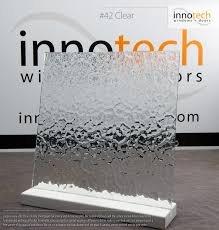
3. Patterned & Textured Glass
This glass has a decorative, dimensional surface that distorts the view and adds a unique design element.
Visual Obscurity: The raised patterns—such as flutes, ripples, or geometric designs—distort the view from the outside, providing a moderate to high level of privacy depending on the pattern’s density.
Decorative & Functional: It serves both a practical purpose (privacy) and an aesthetic one, adding texture and visual interest to a space. It is a popular choice for shower enclosures, cabinet doors, and decorative room dividers.
Light Transmission: It allows a significant amount of light to pass through, ensuring the space remains well-lit and comfortable.
Variety of Styles: Available in numerous patterns, from vintage to modern, to complement any design theme.
4. Tinted & Smoked Glass
This type of glass has a darker hue that reduces light transmission and visibility.
Solar Control: Tinted glass absorbs a portion of solar heat and sunlight, helping to keep interior spaces cooler and reducing glare.
One-Way Privacy: When the lighting is brighter on the outside, tinted glass can provide a one-way mirror effect, where people inside can see out, but those outside cannot see in. This effect is lost when the lights are brighter on the inside.
Aesthetic Appeal: It adds a sleek, modern, and dramatic look, often used in building facades, car windows, and architectural features


Reviews
There are no reviews yet.